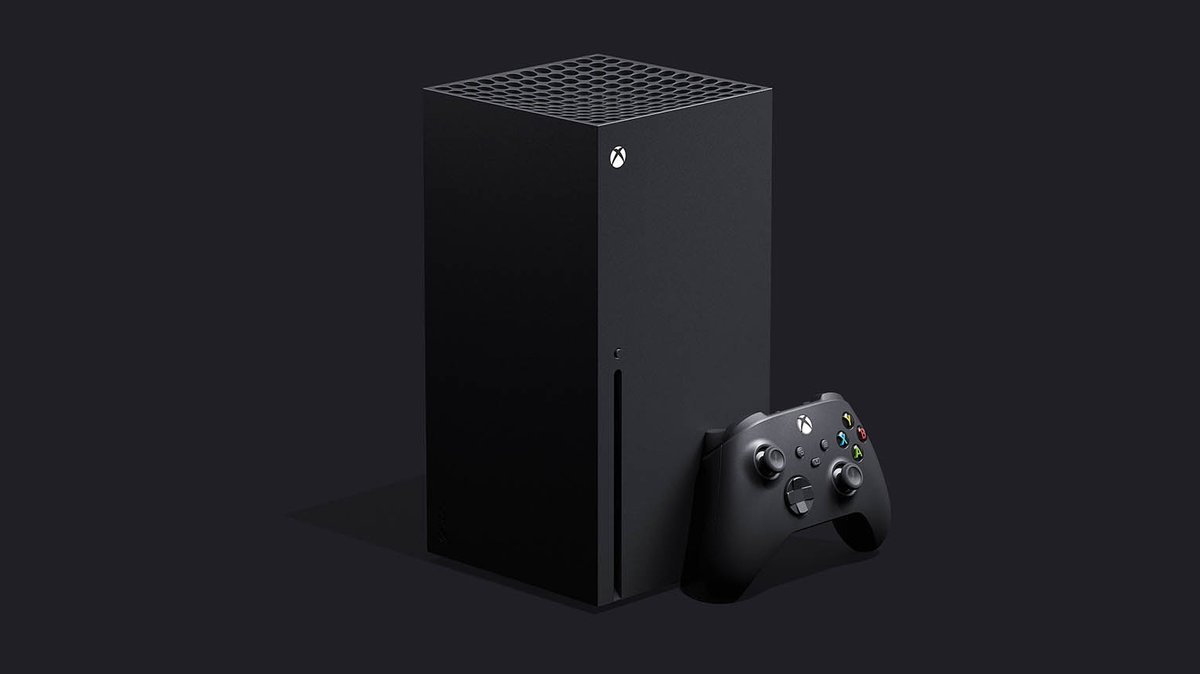
When you invest in a cutting-edge console like the Xbox Series X, you're not just buying a gaming machine; you're often getting a powerful entertainment hub, especially when it comes to Xbox Models and 4K Movie Playback Compatibility. Whether you're keen on spinning a pristine 4K Blu-ray disc or diving into a meticulously curated library of digital video files, understanding your Xbox's capabilities is key to unlocking the ultimate cinematic experience.
Let's cut through the jargon and get straight to how you can transform your Xbox into a top-tier 4K movie player for both discs and your personal media collection.
At a Glance: Your Xbox and 4K Movie Playback
- Xbox Series X is a 4K Disc Champion: It features an internal 4K Blu-ray drive, meaning it can play commercial 4K Ultra HD Blu-ray discs, standard Blu-rays, and DVDs right out of the box.
- Digital File Playback is Picky: While the Xbox Series X can play many digital video files from a USB drive or via DLNA, it has specific format requirements.
- The H.265/HEVC Hurdle: The console cannot natively play 4K H.265/HEVC (.mp4) movies directly from USB or DLNA without prior conversion. This is a common sticking point for many users.
- Supported Digital Formats: MP4 (H.264, MPEG-4), AVI, MOV, and WMV are generally safe bets for direct playback using the free "Media Player" app.
- Conversion is Your Friend: For unsupported formats, a dedicated video converter is often necessary to re-encode your files into an Xbox-friendly format.
- Optimal Settings Matter: Proper HDMI cabling, TV settings, and Xbox display configurations are crucial for enjoying true 4K HDR/Dolby Vision quality.
The Xbox Series X: Your 4K Entertainment Hub (and its Quirks)
The Xbox Series X stands as Microsoft's flagship console, designed not just for high-fidelity gaming but also as a central piece of your home entertainment system. It boasts impressive hardware, including a custom AMD Zen 2-based CPU and an AMD Navi-based GPU, all geared to deliver stunning visuals. But how do these specs translate to watching movies?
Disc Playback: The Built-In 4K Blu-ray Drive
One of the most straightforward ways to enjoy 4K movies on your Xbox Series X is through its integrated optical drive. This isn't just any old DVD player; it's a full-fledged 4K Ultra HD Blu-ray player.
- Commercial 4K Blu-rays: Pop in any official 4K Ultra HD Blu-ray disc, and your Xbox Series X will play it in glorious 4K resolution, often with HDR (High Dynamic Range) or Dolby Vision, provided your TV supports these technologies.
- Standard Blu-rays and DVDs: Your existing collection of Blu-ray and DVD movies will also play without a hitch. The console will even upscale lower-resolution content to 4K, giving it a crisper look on a compatible display.
The convenience of a built-in player means no extra hardware is needed, making the Xbox Series X a cost-effective choice for those who still appreciate physical media.
File Playback: Decoding the Digital Landscape (USB & DLNA)
When it comes to your own digital movie library, the waters get a little murkier. The Xbox Series X offers robust support for playing media from external USB drives and through DLNA (Digital Living Network Alliance) servers on your home network. However, it's not a universal media player, and understanding its format preferences is crucial.
Supported Formats & The H.265/HEVC Challenge
The Xbox Series X is quite capable with widely adopted formats like MP4 (encoded with H.264 or MPEG-4 codecs), AVI, MOV, and WMV. You can simply copy these files to a USB drive, plug it into one of the console's three USB-A ports, and use the "Media Player" app to enjoy them.
However, here's where many users hit a snag: 4K H.265/HEVC (High Efficiency Video Coding) movies often won't play natively from USB or DLNA. While the console's powerful hardware can decode H.265 for gaming and potentially certain streaming apps, the native "Media Player" app and the DLNA streaming protocols on the Xbox typically don't support HEVC or 4K H.265 files when they're delivered from an external source without prior conversion. This means those beautiful, storage-efficient 4K rips you have might require an extra step.
Understanding HDMI & Visual Fidelity: What Your Xbox Outputs
To truly appreciate 4K movies, you need to ensure your Xbox Series X is sending the best possible signal to your TV. The console is packed with features designed for high-end visual and audio performance.
- Video Resolutions, Refresh Rates, and Essential Features:
- Resolution & Framerate: The Xbox Series X can output 2160p (4K) at up to 120Hz and even 4320p (8K) at 60Hz. This capability ensures incredibly sharp images and fluid motion.
- HDMI 2.1: This next-generation HDMI standard is crucial for unlocking the highest resolutions and refresh rates (like 4K @ 120Hz). It also enables features like Auto Low Latency Mode (ALLM) for seamless switching to game mode, and Variable Refresh Rate (VRR) for tear-free gaming.
- HDR10 & Dolby Vision: The Xbox supports both major HDR formats. HDR10 is a widely adopted standard, while Dolby Vision offers dynamic metadata, optimizing brightness and color on a scene-by-scene basis. For movies, these technologies bring out incredible detail in shadows and highlights, alongside a broader color palette.
- Content Protection: HDCP 2.2 is essential for playing protected 4K content, whether from discs or streaming services. Your entire entertainment chain (Xbox, receiver, TV) must support HDCP 2.2.
- Audio Excellence: Immersive Sound for Your Movies
Beyond the visuals, the Xbox Series X is an audio powerhouse. It supports a wide array of audio formats that can deliver a truly immersive cinematic soundscape: - Encoded HDMI Audio: Dolby Digital 5.1, DTS 5.1, and various PCM options (2.0, 5.1, 7.1) are all supported. For games, it even offers Dolby TrueHD with Atmos.
- HDMI Pass-through: Crucially for movie enthusiasts, the Xbox Series X can pass through advanced audio formats like Dolby TrueHD (which can carry Dolby Atmos metadata) and DTS-HD Master Audio (which can carry DTS:X metadata). This means your external A/V receiver or soundbar can do the heavy lifting of decoding these high-resolution, object-based audio tracks, delivering unparalleled sound quality.
Getting Started: Playing Movies from USB Drives and Your Home Network
You've got the files, your Xbox is ready—now what? Here’s the step-by-step guide to playing your digital movie collection.
Step 1: The Essential "Media Player" App
Unlike some consoles, the Xbox doesn't come with a robust media player pre-installed for local files. You'll need to download it:
- Navigate to the Xbox Store: From your console's dashboard, go to "My Games & Apps," then select "Apps."
- Find the "Media Player": Search for "Media Player" in the Xbox Store. It's a free, official app from Microsoft.
- Install It: Once found, install the app. It's lightweight and essential for local file playback.
Step 2: Preparing Your USB Drive for Flawless Playback
For physical file transfer, a USB drive is your best friend.
- Format Your USB Drive:
- For Windows Users: Most USB drives come pre-formatted as NTFS, which your Xbox can read. However, if you're experiencing issues, or if you also use a Mac, consider formatting the drive as exFAT. This format is universally readable by both Windows PCs and Macs, and crucial for file sizes larger than 4GB (which 4K movies often are).
- For Mac Users: Format your drive as exFAT to ensure Xbox compatibility. Mac's native APFS or HFS+ are not readable by the Xbox.
- How to Format (Windows): Plug in your USB drive, open "This PC" (or "My Computer"), right-click the drive, select "Format," choose "exFAT" from the dropdown, and click "Start."
- How to Format (Mac): Plug in your USB drive, open "Disk Utility," select the drive, click "Erase," choose "ExFAT" for format and "Master Boot Record" for scheme, then click "Erase."
- Copy Your Media Files: Drag and drop your supported movie files (e.g., MP4 with H.264, WMV) onto your freshly formatted USB drive.
- Connect to Your Xbox: Plug the USB drive into any available USB-A port on your Xbox Series X.
- Open Media Player & Play: Launch the "Media Player" app, select your USB drive from the list of available sources, and browse to find and play your movie.
Step 3: Streaming Across Your Network with DLNA
DLNA allows you to stream media from a computer or NAS (Network Attached Storage) device directly to your Xbox over your home network.
- Set up a DLNA Server:
- Windows: Windows Media Player can function as a DLNA server. Open it, go to "Stream," and enable "Turn on media streaming." Add the folders containing your movies to its library.
- Mac/Other OS: Solutions like Plex Media Server (even without a Plex Pass, the server functions as DLNA) or other dedicated DLNA server software can be used. Ensure your movie files are in Xbox-compatible formats or that your DLNA server can transcode them on the fly (though this can be resource-intensive).
- Ensure Format Compatibility: Just like with USB drives, your streamed movies need to be in Xbox-supported formats (MP4 H.264, etc.). If they're not, you might need to convert them beforehand or rely on your DLNA server's transcoding capabilities (if it has them and you've configured them).
- Access on Xbox: Open the "Media Player" app on your Xbox, and you should see your DLNA server listed as an available source. Select it, browse your shared folders, and start streaming.
When Your Files Don't Play Nice: The Power of Conversion
This is where the H.265/HEVC conundrum often leads. If you try to play a 4K movie file and your Xbox throws an error or simply refuses, it's almost certainly a codec issue.
Why Conversion is Often Necessary
Modern 4K video files, especially those you might rip or download, frequently use the H.265 (HEVC) codec. This codec is incredibly efficient, allowing for high-quality video at smaller file sizes. However, as noted, the Xbox's native Media Player app (or DLNA pathways) often doesn't natively support H.265/HEVC for external files. The console expects formats like H.264 MP4, WMV, or certain AVI/MOV variants.
Conversion is simply the process of re-encoding your video file from an unsupported format (e.g., H.265 MKV) to a supported one (e.g., H.264 MP4).
Your Conversion Toolkit: A Step-by-Step Guide
There are many video converters available. One reliable option, as suggested in expert circles, is a tool like Acrok Video Converter Ultimate. While the specific software name is mentioned, the general steps apply to most reputable converters.
- Install and Run Your Converter: Download and install your chosen video converter software on your PC or Mac. Launch it.
- Load Your Video Files: Click the "Add file" button (or similar) within the software to import the 4K movie files you want to convert. You can often add multiple files for batch processing.
- Select Output Format: This is the most critical step. You need to choose an output profile that is Xbox-compatible and maintains 4K resolution.
- For 1080p/720p content, look for profiles like "Game > Xbox One HD Video (*.wmv)."
- For 4K H.265 MP4/MKV/MOV files that you want to keep in 4K resolution, search for a profile under "4K Video > 4K MP4 (*.mp4)." This ensures the output is 4K resolution using the more compatible H.264 codec within an MP4 container.
- Adjust Parameters (Optional but Recommended): Most converters have a "Settings" or "Options" button next to the output profile. Here, you can:
- Verify Resolution: Ensure the output resolution is set to 3840x2160 (for 4K).
- Choose Video Codec: Confirm it's H.264 (or MPEG-4) if converting from H.265.
- Adjust Bitrate: A higher bitrate generally means better quality but larger file size. For 4K, aim for a healthy bitrate if quality is paramount.
- Audio Settings: Select an audio codec like AAC or AC3, and ensure channel configuration (e.g., 5.1) is maintained if desired.
- Start Conversion: Once your settings are dialed in, click the "Convert" button. The conversion process can take a significant amount of time, especially for 4K files, so be patient.
- Transfer and Play: After conversion, transfer the newly created, Xbox-compatible files to your USB drive and follow the steps outlined above to play them using the Media Player app.
Pro-Tip: Many converters also offer editing features (trimming, cropping, adding watermarks) and the ability to rip Blu-ray/DVDs, which can be useful for digitizing your physical movie collection into Xbox-friendly formats.
Optimizing Your Viewing Experience: Recommended Xbox Series X Settings
The best 4K movie playback doesn't just come from the file itself; it also relies on proper setup. Your Xbox Series X is smart, often auto-detecting your TV's capabilities via HDMI E-EDID, but a few manual checks can make all the difference.
Ensuring Your Setup is Ready: Cables, Receivers, and TV Firmware
Before diving into console settings, ensure your physical setup is optimized:
- Use an 'Ultra High Speed' HDMI Cable: The cable included with your Xbox Series X is one such example. These cables are certified to handle the bandwidth required for 4K @ 120Hz and advanced HDR formats. Generic or older HDMI cables might cause picture dropouts or prevent certain features from activating.
- A/V Receiver/Soundbar Check: If you're routing your Xbox through a receiver or soundbar, it must support HDMI 2.1 passthrough to maintain 4K @ 120Hz and VRR capabilities. If it doesn't, connect your Xbox directly to your TV's HDMI 2.1 port and use HDMI eARC from your TV to send audio back to your receiver.
- Enable 'Enhanced' HDMI Mode on Your TV: Most modern 4K TVs have specific settings for their HDMI ports (e.g., "Enhanced Format," "HDMI UHD Color," "Deep Color"). Make sure the HDMI port your Xbox is connected to has this mode enabled in your TV's settings.
- Update Your TV's Firmware: Manufacturers regularly release firmware updates that improve compatibility and performance. Check your TV's settings for the latest firmware and install it.
Fine-Tuning Your Xbox Display Settings for Movies
Head to Settings > General > TV & display options on your Xbox Series X to configure these vital settings.
- Resolution and Refresh Rate: The Sweet Spot
- Resolution: Set this to 4K UHD. This ensures the Xbox outputs a native 4K signal to your TV.
- Refresh Rate: For most movies, 60 Hz is sufficient and often preferable. While your Xbox can do 120Hz, movie content is typically 24Hz, 25Hz, 30Hz, or 60Hz. Setting 120Hz when content is lower can sometimes lead to "double-image effects" on certain TVs, especially with features like BFI (Black Frame Insertion). Stick to 60Hz for a smooth movie experience, or let the Xbox switch automatically if you've enabled
Allow 24HzandAllow 50Hz. - HDR and Dolby Vision: Calibrating for Picture Perfect
- Calibrate HDR for games: Even for movies, doing this calibration is good practice. In your TV's picture menu, set its tone-mapping to 'off' or 'HGiG' if available. Then, follow the on-screen instructions on the Xbox. This helps ensure accurate HDR tone-mapping, so content appears as intended.
- Allow HDR10: Set to Yes. This enables standard HDR output.
- Allow Dolby Vision: Set to Yes. If your TV supports Dolby Vision, this will activate it for compatible content.
- Auto HDR: Set to No. Auto HDR is an Xbox feature that algorithmically converts SDR (Standard Dynamic Range) games to HDR. While it can make some games look impactful, it often alters creative intent and is generally not recommended for movies or even most games, particularly on LCD TVs.
- Navigating Video Modes: 24Hz, ALLM, VRR, and More
UnderVideo modesin your Xbox settings, you'll find several toggles: - Allow 50Hz: Yes. This is useful for European content (e.g., PAL DVDs/Blu-rays).
- Allow 24Hz: Yes. Crucial for movies! Most cinematic content is filmed at 24 frames per second. Allowing 24Hz ensures your Xbox outputs movies at their native framerate, preventing "judder" from 3:2 pull-down (where 24fps content is converted to 60Hz).
- Allow auto-low latency mode (ALLM): Yes. ALLM automatically switches your TV to its low-latency game mode when you launch a game. For movies, this isn't strictly necessary and game mode might have overly aggressive picture settings. You can choose to disable ALLM on the Xbox and manually set a preferred picture mode for your Xbox's HDMI input on your TV.
- Allow variable refresh rate (VRR): Yes. VRR synchronizes your TV's refresh rate with the console's framerate, ideal for smooth, tear-free gaming. For movie playback, it has less impact. Note that some OLED TVs (like LG Display panels) might exhibit slightly raised blacks in VRR mode. If this bothers you during movie watching, you can disable VRR on the Xbox.
- Allow 4:2:2: Yes. This enables 4:2:2 chroma subsampling, which can be useful, especially over HDMI 2.0 connections where it helps maintain higher resolutions at certain refresh rates. With HDMI 2.1, this is less of a concern, but generally safe to leave on.
- Allow 4K: Yes. Ensures 4K resolution is enabled.
- Video Fidelity & Overscan
- Colour depth: Start with 24 bits per pixel (8-bit). While 30 bits per pixel (10-bit) allows for greater color information, 8-bit is safer and compatible with virtually all setups, especially over HDMI 2.0. HDMI 2.1 reduces these limitations, but 8-bit RGB is always a solid baseline.
- Colour space: Select Standard (Recommended). This typically corresponds to 'Limited' range in the TV ecosystem, which is standard for consumer video content.
Xbox Series X vs. PlayStation 5: A Quick Media Playback Comparison
While the focus here is the Xbox Series X, it's worth a quick look at its closest competitor, the PlayStation 5, for media playback. Both consoles are surprisingly similar in their core capabilities:
- Optical Drive: Both the Xbox Series X and the PlayStation 5 (disc edition) feature an integrated 4K Blu-ray drive, allowing them to play 4K Ultra HD Blu-rays, standard Blu-rays, and DVDs.
- Video Output: Both consoles support 8K and 4K @ 120Hz video output, along with HDR10 and Dolby Vision (Xbox) or HDR10 only (PS5 for disc/apps, games can do Dolby Vision with update).
- Digital Media Playback: Both consoles rely on a default media player app for USB playback and support DLNA. Similar to the Xbox, the PS5 also has its own set of compatible codecs and can be particular about H.265/HEVC playback without conversion or specific apps.
- HDMI 2.1: Both consoles utilize HDMI 2.1 for their highest-end video features.
In essence, for physical 4K disc playback, both offer a very similar, excellent experience. For digital files, both require users to pay attention to supported codecs and might necessitate conversion for more advanced formats like H.265.
Troubleshooting Common Playback Issues
Even with the right settings, you might encounter a hiccup or two. Here are quick solutions for common problems:
- No 4K/HDR "Green Ticks" in Xbox Settings: If your Xbox settings show red or missing "green ticks" next to 4K or HDR features:
- Cable Check: Re-verify you are using an 'Ultra High Speed' HDMI cable.
- HDMI Port: Ensure your TV is set to 'Enhanced' mode for that specific HDMI port.
- Direct Connection: Bypass any A/V receiver or soundbar by connecting the Xbox directly to the TV for testing. If it works, your receiver might be the bottleneck (lacking HDMI 2.1 passthrough).
- TV Firmware: Double-check for the latest TV firmware update.
- "Unsupported Format" Error for Digital Files: This is almost always a codec issue. Your file is likely H.265/HEVC, MKV, or another format not natively supported by the Xbox Media Player. Your solution: convert the file to H.264 MP4 or WMV.
- Audio Dropouts or Missing Surround Sound:
- Xbox Audio Settings: Verify your Xbox audio settings under
General > Volume & audio outputare correctly configured for your setup (e.g.,HDMI audioset toBitstream pass-throughif using an external receiver for advanced codecs). - Receiver/Soundbar Input: Ensure your receiver/soundbar is set to the correct input and is configured to decode the incoming audio format.
- Cable: A faulty HDMI cable can sometimes cause audio issues.
Your Next Steps to 4K Movie Nirvana
You now have all the tools and knowledge to turn your Xbox Series X into a true 4K cinematic powerhouse.
- Start with Discs: If you have 4K Blu-rays, pop one in! It's the most straightforward path to high-quality 4K HDR.
- Organize Your Digital Library: Consolidate your digital movies and identify any that might be in unsupported H.265/HEVC formats.
- Download the Media Player App: This is non-negotiable for local file playback.
- Prepare Your USB Drive: Format it to exFAT and load it with Xbox-compatible files (or converted ones).
- Master Conversion: If you have files that won't play, invest a little time in a video converter. It's a one-time learning curve that pays off immensely.
- Optimize Your Settings: Regularly review your Xbox display and audio settings, ensuring they're aligned with your TV and audio setup for the best possible experience.
By following these steps, you'll be well on your way to enjoying breathtaking 4K movies, whether they're on a physical disc or part of your meticulously curated digital collection, all powered by your Xbox Series X.