When you power on your Xbox for a gaming session or settle in for a 4K movie, you're not just looking at pixels; you're entering a world crafted with advanced visual and audio technologies. But to truly unlock that world, you need a firm Understanding HDR, Dolby Vision, and Audio Formats for Xbox 4K. For many, these terms float around like buzzwords, promising cinematic grandeur but often leaving a trail of confusion about what they actually mean for your setup.
As someone who's spent countless hours deciphering the intricacies of home entertainment, I can tell you that getting these elements right isn't just about having the latest gear; it's about understanding how they work together to create an unforgettable experience. This guide will cut through the jargon, giving you the clear, actionable insights you need to make your Xbox 4K setup shine—and sound spectacular.
At a Glance: What You'll Master
- HDR vs. Dolby Vision: Learn the key differences between these visual technologies and why Dolby Vision often offers a superior, scene-by-scene optimized picture.
- Audio Formats Demystified: Understand the evolution from Dolby Digital to the immersive power of Dolby Atmos, and how they impact your gaming and movie watching.
- Essential Gear: Pinpoint the right 4K TV, sound system, and cables required to fully support these advanced formats on your Xbox.
- Optimizing Your Xbox: Discover the specific settings you need to tweak on your console to ensure you're getting the best possible picture and sound.
- Practical Setups: Get realistic recommendations for home theater configurations, from simple soundbars to multi-speaker Atmos systems.
- Common Questions Answered: Tackle frequently asked questions about compatibility, performance, and troubleshooting.
Seeing is Believing: Deciphering HDR and Dolby Vision
Let's start with what you see. You've got a 4K TV, and your Xbox is pumping out glorious resolution. But 4K resolution (the sheer number of pixels) is only half the story. The quality of those pixels—how bright they are, how dark they can get, and how many colors they can display—that's where High Dynamic Range (HDR) comes in.
HDR isn't just "brighter." It's about a vastly expanded range between the lightest whites and darkest blacks, revealing details previously lost in shadows or blown out in highlights. It also brings a wider color gamut, making reds richer, greens lusher, and skies more vibrant. It's like upgrading from a crayon box to an artist's palette.
HDR10: The Foundation of High Dynamic Range
HDR10 is the most common and widely supported HDR standard. It's an open-source format, meaning manufacturers don't have to pay licensing fees to include it in their products. Your Xbox Series X/S (and Xbox One X) outputs HDR10 for most HDR-compatible content.
How does it work? HDR10 uses "static metadata." This means that when a movie or game is mastered in HDR10, it's given a single set of instructions for brightness and color for the entire piece of content. Your TV then applies those instructions globally. While a significant leap over Standard Dynamic Range (SDR), it's a one-size-fits-all approach.
Dolby Vision: Dynamic Brilliance, Scene by Scene
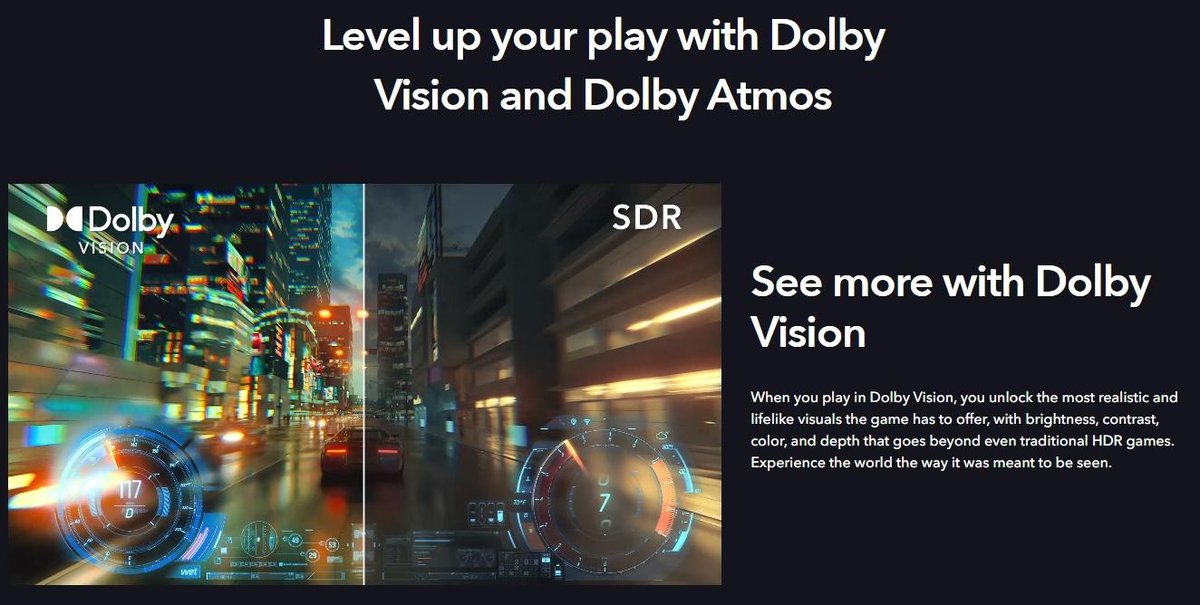
Enter Dolby Vision. Think of it as HDR10's more sophisticated sibling. While it builds on the same principles of expanded brightness, contrast, and color, Dolby Vision utilizes "dynamic metadata." Instead of one set of instructions for the whole show, Dolby Vision provides metadata scene by scene, or even frame by frame.
This granular control allows your TV to optimize the picture in real-time for each individual moment. A dark cave scene can be perfectly rendered without sacrificing shadow detail, while a bright sunny landscape immediately afterwards gets its own precise calibration. The result is often a more accurate, impactful, and visually stunning picture. Xbox Series X/S supports Dolby Vision for both streaming apps and, crucially, for gaming, making it a key feature for enthusiasts.
A Quick Word on HDR10+
You might hear about HDR10+, another dynamic HDR format, primarily championed by Samsung and Amazon. While it also uses dynamic metadata like Dolby Vision, it's less prevalent in the gaming world and not supported by Xbox consoles for gaming or system-level output. For most Xbox users, the choice is effectively between HDR10 and Dolby Vision.
Getting HDR and Dolby Vision Firing on Your Xbox
To experience these visual treats, you'll need a few things in alignment:
- An Xbox One X, Xbox Series S, or Xbox Series X: These consoles are capable of outputting HDR10 and Dolby Vision.
- A Compatible 4K HDR TV: Your TV must specifically support HDR10 for basic HDR, and Dolby Vision for the premium experience. Check your TV's specifications. Many modern the best 4K TVs for gaming will clearly list these.
- High-Speed HDMI Cable: While not all HDMI cables are created equal, a "High-Speed" or "Ultra High-Speed" HDMI cable is crucial for handling the increased bandwidth of 4K HDR/Dolby Vision signals. If you're using an older cable, you might encounter flickering, signal drops, or a lack of HDR entirely.
- Correct Xbox Settings: Dive into your Xbox's settings under
General > TV & display options > 4K TV details. Here, your Xbox will tell you exactly what your TV supports. Make sure HDR10 and Dolby Vision for gaming are checked. You may also need to enable "Enhanced HDMI" or "HDMI Deep Color" on your TV's specific HDMI input.
Pro-Tip: Sometimes, the simplest solution is overlooked. Ensure your TV's firmware is up to date, and if you're connecting through an A/V receiver, ensure it also supports HDR passthrough and has the latest firmware.
Hearing the Difference: Navigating Dolby Audio Formats
Now that your eyes are feasting, let's turn to your ears. Immersive audio is just as vital as stunning visuals for pulling you into a game world or a movie. Dolby has been at the forefront of audio innovation for decades, and their suite of formats provides everything from basic surround sound to full 3D spatial audio.
Dolby's dominance in home theater audio, especially for consoles like the Xbox, is well-established, largely surpassing competitors like DTS in widespread adoption and feature sets. When you're Playing 4K movies on Xbox or diving into the latest blockbuster game, chances are you'll be experiencing a Dolby audio format.
Dolby's Legacy: From Channels to Objects
Before we jump to the latest and greatest, a quick historical perspective helps. Dolby's journey began with simpler formats, each building on the last to create richer soundscapes.
- Dolby Surround (and Pro Logic): The Origins. Back in 1982, Dolby Surround brought a taste of cinema to the living room by decoding 4-channel audio into 3 channels (left, right, surround). Its evolution, Dolby Surround Pro Logic, further refined this for 4 discrete channels (left, right, center, rear). While original Pro Logic is largely a relic, the "Dolby Surround" name was later rebranded in 2014 for an upmixing technology that takes stereo or multi-channel signals and expands them for modern Atmos systems. You might not see it explicitly listed, but it's often working behind the scenes.
- Dolby Digital (AC-3): The Ubiquitous Standard. This is the workhorse of surround sound. Introduced in the 1990s, Dolby Digital (technically AC-3) is everywhere: broadcast TV, streaming, Blu-rays, DVDs, and yes, your Xbox. It's a compression format that enables 5.1-channel surround sound—that's three speakers across the front (left, center, right), two for the rear (surround left, surround right), and one dedicated subwoofer for low-frequency effects (the ".1"). It's efficient, effective, and forms the bedrock of most home theater experiences.
- Variants: You might encounter
Digital EX(adds a rear center channel for 6.1),Digital Plus(a higher-bandwidth version for streaming and Blu-rays, often paired with Atmos), orAC-4(a newer, more efficient format supporting audio objects). - Dolby TrueHD: Lossless Purity. If Dolby Digital is a high-quality MP3, Dolby TrueHD is the uncompressed WAV file. This is Dolby's lossless audio format, offering a perfect, bit-for-bit replication of the original source material. TrueHD can deliver up to seven channels of stunning 24-bit, 96kHz audio, plus a subwoofer channel—that's beyond CD quality.
- Where you'll find it: Due to its demanding nature and high bandwidth requirements, TrueHD is primarily found on 4K Blu-ray discs. Streaming services, even those offering Atmos, typically use
Dolby Digital Plusto manage data consumption alongside bandwidth-intensive 4K HDR video. To enjoy TrueHD, you'll need a compatible A/V receiver, a Blu-ray player, and an HDMI 2.0 or 2.1 connection (ideally over eARC for audio return).
Dolby Atmos: Beyond Surround – A World of Spatial Audio
This is where audio truly becomes immersive. Dolby Atmos isn't just about channels; it's about audio objects. Imagine a sound engineer can place individual sounds—a helicopter, a bullet whizzing by, a whisper—anywhere in a 3D space, not just assign them to a specific speaker. This spatial audio format dramatically enhances realism and immersion.
The marquee feature of Atmos is its ability to place sounds overhead. This can be achieved with dedicated ceiling speakers or, more commonly in home setups, with "up-firing" drivers in soundbars or front speakers that bounce sound off your ceiling.
- Atmos in Your Home Theater: Home Atmos systems are typically extensions of 5.1 or 7.1 channel layouts. A common configuration like "5.1.4" means you have five traditional surround channels, one subwoofer, and four overhead (or up-firing) speakers. A "7.1.4" system adds two more surround channels. While theoretically setups up to 24.1.10 channels are possible for maximum granular object placement, practical home systems usually stick to 5.1.4 or 7.1.4, as the returns diminish beyond that.
- Atmos on Xbox: Your Xbox Series X/S can output Dolby Atmos for both gaming and streaming apps. To enable it, you'll need to download the free "Dolby Access" app from the Xbox Store. In your Xbox settings, go to
General > Volume & audio output > Speaker audioand selectBitstream outfor yourHDMI audio, then chooseDolby Atmos for home theaterfrom theBitstream formatdropdown. - Bandwidth Considerations: True multi-channel Atmos requires sufficient bandwidth, meaning at least HDMI 2.0, Wi-Fi, or Ethernet. Optical audio (TOSLINK) and standard Bluetooth connections lack the bandwidth for full, uncompressed Atmos.
- Simulated Atmos (Soundbars & Headphones): Many Atmos-capable soundbars create a convincing spatial audio experience by bouncing sounds off walls and ceilings. While not the same as discrete overhead speakers, it's a highly recommended, simpler alternative that provides a significantly enhanced experience over traditional stereo or basic surround. Similarly, "Dolby Atmos for Headphones" (also enabled via the Dolby Access app) uses advanced processing to simulate 3D audio over any pair of stereo headphones, tricking your brain into perceiving depth and direction. Apple Spatial Audio, used on AirPods and Vision Pro, also utilizes Atmos content and adds gyroscopic head tracking for even more dynamic positioning.
Crafting Your Ultimate Xbox 4K Home Theater Experience
Getting the best out of your Xbox involves more than just plugging it in. It's about a harmonious relationship between your console, TV, and audio system. Let's break down the components and how to put them together.
The Essential Gear Checklist
To truly unlock that peak Xbox 4K experience, here's what you'll need:
- Xbox Console: An Xbox One X, Xbox Series S, or Xbox Series X. The Series X/S consoles offer the best performance, including support for Dolby Vision gaming and higher frame rates.
- 4K HDR/Dolby Vision TV: Look for a TV that explicitly supports HDR10 and, ideally, Dolby Vision. Crucial features for gamers include:
- HDMI 2.1 Ports: Essential for 4K at 120Hz (frames per second) and advanced features like Variable Refresh Rate (VRR) and Auto Low Latency Mode (ALLM). Even for 4K/60Hz, HDMI 2.1 future-proofs your setup. For more on this, check out our guide on understanding HDMI 2.1.
- Low Input Lag: Important for responsive gaming.
- eARC (Enhanced Audio Return Channel): Allows your TV to send high-bandwidth audio formats (like Atmos) from its internal apps or connected devices back to your A/V receiver or soundbar using a single HDMI cable.
- A/V Receiver or Soundbar:
- For Multi-Speaker Setups: An A/V receiver with HDMI 2.1 passthrough (for 4K/120Hz) and full Dolby Atmos decoding capabilities is ideal. Ensure it has enough HDMI inputs for all your devices.
- For Simplicity: An Atmos-capable soundbar is a fantastic option. Many offer virtualized or up-firing Atmos, are easy to install, and connect with just one or two cables (often via eARC). Learn more about choosing the right soundbar for your specific needs.
- Certified HDMI Cables: "Ultra High-Speed" HDMI cables are necessary for 4K 120Hz, HDR, and Dolby Vision. While the Xbox comes with one, you may need additional high-quality cables for your other devices.
Connecting It All: Best Practices for Setup
- Direct Connection is King (When Possible): For the best picture and lowest input lag, always try to connect your Xbox directly to your TV's HDMI 2.1 port. Then, use the TV's eARC port to send the audio signal to your soundbar or A/V receiver. This ensures the Xbox signal reaches the TV unimpeded.
- Receiver Passthrough: If your A/V receiver has HDMI 2.1 ports with full passthrough support for 4K/120Hz, VRR, and ALLM, you can connect your Xbox to the receiver, and then the receiver to the TV. However, always verify your receiver's capabilities, as some older "4K pass-through" receivers might strip out HDR or 120Hz signals.
- Enable eARC: On your TV, make sure eARC is enabled in the audio settings. This allows uncompressed audio formats like Dolby Atmos (over Dolby Digital Plus or TrueHD) to be sent from your TV to your sound system.
Xbox Settings Deep Dive: Unleashing the Beast
Once everything is physically connected, it's time to fine-tune your Xbox settings. This is crucial for optimizing your Xbox's audio settings and picture.
- Video Settings:
- Go to
General > TV & display options. - Resolution: Set to
4K UHD. - Refresh Rate: Set to
120Hzif your TV supports it and you have an HDMI 2.1 connection (for relevant games). Otherwise, stick to60Hz. - Video Fidelity & Overscan:
Displaydropdown: ChooseHDMI.Color depth: Set to10-bit(for HDR/Dolby Vision).Color space: ChooseStandard (recommended).- Video Modes: Crucially, ensure the following are checked:
Allow 4KAllow HDR10Allow Dolby Vision(if your TV supports it and you want to use it for gaming).Allow Variable Refresh Rate (VRR)Allow Auto Low-Latency Mode (ALLM)- 4K TV Details: This screen will give you a comprehensive breakdown of what your TV supports based on its current connection. Use this as your guide. If something isn't checked that you expect to be, investigate your TV settings or cable.
- Audio Settings:
- Go to
General > Volume & audio output. - Speaker audio:
HDMI audio: SelectBitstream out.Bitstream format: ChooseDolby Atmos for home theater(if you have an Atmos sound system). If not, chooseDolby DigitalorDolby Digital Plusfor standard surround sound.- Headset audio:
Headset format: SelectDolby Atmos for Headphones(after installing the Dolby Access app). This transforms any stereo headphones into a virtual 3D soundstage.
Practical Home Theater Configurations for Xbox Gamers
The "best" setup is subjective and depends heavily on your budget, space, and tolerance for complexity. Here's a realistic look, informed by expert consensus:
- The Unrealistic Dream: A 24.1.10-channel Atmos system with an HDMI 2.1/2.2 receiver and a Blu-ray player delivering TrueHD. This is technically the pinnacle, offering maximum discrete object placement and lossless audio. However, it demands an exorbitant budget, a dedicated room, and a custom installation—making it unfeasible for 99.9% of users.
- The Sweet Spot (Optimal & Practical): A 5.1.4- or 7.1.4-channel Dolby Atmos system. This means a traditional 5.1 or 7.1 surround setup with four overhead or up-firing Atmos speakers. This configuration offers truly immersive spatial audio, where sounds can move convincingly above and around you. Going beyond 7.1.4 generally offers diminishing returns in noticeable sound distinction for home use. This requires an Atmos-capable A/V receiver, appropriate speakers, and some installation effort.
- The Great & Manageable: A straightforward 5.1- or 7.1-channel surround sound system. While you won't get the height effects of Atmos, a well-configured 5.1 or 7.1 system provides robust, directional audio that significantly enhances immersion over stereo. Many find the complexity of installing ceiling satellites for Atmos to be more trouble than it's worth, making this a perfectly satisfying choice. Your Xbox will output Dolby Digital or Dolby Digital Plus to these systems.
- The Smart Soundbar Choice: An Atmos-capable soundbar (with or without satellite rear speakers and a subwoofer). This is perhaps the most recommended, simple, and effective option for many. Modern soundbars are remarkably good at simulating spatial audio by bouncing sounds off walls and ceilings. They're incredibly easy to install (often just one HDMI cable), don't require a bulky A/V receiver, and provide a "good enough" Atmos experience for the vast majority of users, dramatically upgrading your TV's built-in speakers.
Quick Answers to Your Xbox Visual & Audio Questions
Let's clear up some common points of confusion.
Do I need HDMI 2.1 for Dolby Vision?
Not necessarily for Dolby Vision itself at 4K 60Hz. HDMI 2.0 can carry 4K 60Hz with HDR/Dolby Vision. However, if you want to experience Dolby Vision gaming at 4K 120Hz (available on Xbox Series X/S with compatible games and TVs), then yes, HDMI 2.1 is essential. It provides the necessary bandwidth for the higher refresh rate alongside the visual enhancements.
Can I get Atmos with just a soundbar?
Yes! Many soundbars, especially those advertised as "Dolby Atmos soundbars," are designed to simulate the overhead and spatial effects of Atmos using advanced processing and up-firing drivers. While it's not the same as a dedicated multi-speaker setup, it creates a very convincing and immersive experience that is a significant upgrade from standard TV audio.
Is Dolby TrueHD worth it for gaming?
For gaming on Xbox, no, not directly. Games don't typically use Dolby TrueHD. The Xbox outputs either uncompressed PCM (for stereo or multi-channel without Atmos) or a bitstream format like Dolby Digital, Dolby Digital Plus, or Dolby Atmos (which uses Digital Plus compression). Dolby TrueHD is primarily a format for lossless audio on physical media like 4K Blu-rays.
What's the difference between Atmos for Home Theater and Atmos for Headphones?
"Dolby Atmos for Home Theater" utilizes discrete speaker channels (including height channels) in your physical room to render spatial audio. "Dolby Atmos for Headphones" is a virtualized solution that uses advanced algorithms to simulate 3D audio over any stereo headphones, tricking your brain into perceiving depth and direction without needing physical overhead speakers. Both aim for spatial immersion, but the execution differs.
Does my TV need specific specs for Dolby Vision beyond just "4K HDR"?
Yes. For Dolby Vision, your TV must specifically support the Dolby Vision standard. Not all HDR TVs support Dolby Vision; some might only support HDR10. Look for the Dolby Vision logo or explicit mention in your TV's specifications. For the best Dolby Vision experience, a TV with high peak brightness and excellent local dimming will make the most of Dolby Vision's dynamic metadata.
Unleashing the Full Potential of Your Xbox
Navigating the landscape of HDR, Dolby Vision, and the myriad of Dolby audio formats can seem daunting at first. But with a little understanding and the right setup, you're not just playing games or watching movies; you're experiencing them in a way that’s richer, more vibrant, and profoundly more immersive.
Remember, the goal isn't necessarily to own the most expensive gear, but to make the most of what you have and choose wisely for what you acquire next. By understanding these core technologies, configuring your Xbox correctly, and matching it with capable display and audio systems, you're well on your way to a truly premium experience. So go forth, calibrate with confidence, and prepare to be fully transported into your digital worlds. Your Xbox, and your senses, will thank you.